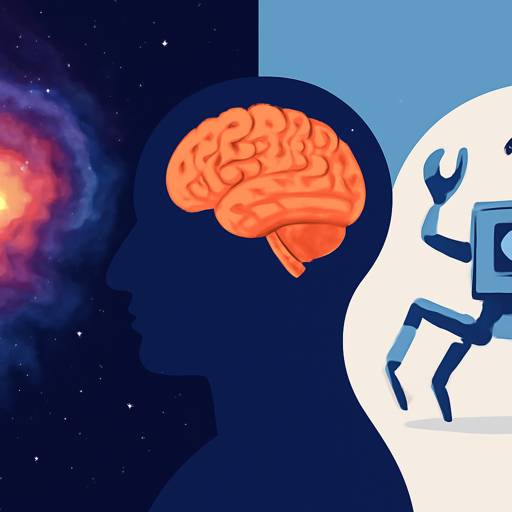
Astronomy Research Ideas and Space Telescope Projects You Can Start Today
Exploring the universe no longer requires a mountaintop observatory or a room full of instruments. With a laptop and curiosity, students can dive into astronomy research ideas that use real data from professional missions. Public archives host terabytes of observations from TESS, Kepler, Hubble, and JWST, letting learners test hypotheses, detect planetary shadows, and measure stellar rhythms. A practical starting point is exoplanet transit analysis: download a star’s light curve from the MAST archive, use Lightkurve or AstroImageJ to clean the data, then search for periodic dips. If those dips align and repeat, you may have corroborated a candidate planet’s existence. This path introduces authentic skills—signal processing, noise modeling, and time-series analysis—while connecting directly to cutting-edge discovery.
Another rich avenue is variable star photometry. By measuring brightness changes of Cepheids or RR Lyrae, students can practice differential photometry and understand how stellar pulsations reveal distance and structure. Open databases and communities like AAVSO offer standardized methods and comparison star catalogs, supporting rigor that mirrors professional workflows. Spectroscopy—once out of reach for classrooms—is now approachable with low-cost diffraction gratings and DSLR cameras. Students can capture stellar spectra, identify absorption lines, and infer temperature and composition, blending physics and observation into a cohesive narrative of how we know what we know about stars. In each case, learners move beyond memorization and into authentic, data-driven inquiry.
For teams seeking engineering flair, small-scale Space Telescope Projects can be framed as design studies. Define a science goal—identifying near-Earth asteroids, tracking variable stars, or monitoring auroras—then outline optical parameters, detector specs, pointing accuracy, and a calibration plan. Even without launching hardware, such projects cultivate systems thinking: how aperture affects sensitivity, why thermal stability matters, and how calibration lamps and flat fields preserve data integrity. Schools can also deploy all-sky cameras or modest refractors with CCDs to create local datasets for repeated analysis, comparing ground-based results with space observatories. By pairing technical design with real archive mining, students experience the synergy that powers modern astrophysics: clever instrumentation and careful analysis working in concert to reveal the cosmos.
Cognitive Science for High School: Experiments That Decode How Minds Work
Understanding the mind is a scientific adventure perfectly suited to classrooms. In cognitive science for high school, students can design controlled experiments addressing attention, perception, memory, language, and decision-making. Classic paradigms—Stroop interference, change blindness, visual search, and memory span—translate elegantly to laptops or smartphones. For instance, a class might implement the Stroop task with colored words and measure reaction times, predicting slower responses when ink color and word meaning conflict. With a sample of peers and repeated trials, the data typically reveal a robust interference effect, opening doors to discussions about automaticity, cognitive control, and neural bottlenecks in processing.
Modern tools make these studies accessible. Software like PsychoPy, OpenSesame, or web frameworks such as jsPsych allow precise stimulus presentation and millisecond timing. Students can preregister their hypotheses, define independent and dependent variables, and specify controls, mirroring best practices in research. Analysis with spreadsheets or Python introduces fundamental statistics—means, standard deviations, t-tests, effect sizes—while emphasizing reproducibility and clear reporting. Ethical guidelines underscore the learning: obtain informed consent, anonymize data, and avoid sensitive questions. Even simple surveys exploring memory confidence or metacognition can spark insightful conversations about how reliably (or unreliably) we introspect.
Beyond lab-style tasks, everyday technology extends the field into the real world. Smartphones record tap latency, eye movement proxies, and navigation patterns; wearables capture heart rate variability and sleep metrics. Students can examine how cognitive performance shifts with sleep debt, distraction, or exercise, controlling confounds like time of day and caffeine intake. They might prototype cognitive training regimes—spaced repetition for vocabulary, dual-task practice for attention—and evaluate transfer effects. More advanced groups can build computational models that simulate reaction times or decision thresholds, then fit parameters to their own data, blending psychology with computer science. This approach transforms the classroom into an ethical, data-fluent lab where minds are not just studied but methodically understood, reinforcing that curiosity plus careful design yields replicable insights into human thinking.
Humanoid and Swarm Robotics for Students: From Solo Gaits to Collective Intelligence
Bringing intelligence into the physical world captivates learners, and both humanoid robotics for students and swarm approaches offer rich, hands-on pathways. A basic biped project illuminates kinematics, dynamics, control, and embedded systems. Start with a compact frame, 8–12 micro servos, an IMU for balance, and a microcontroller like an Arduino or an ESP32. Students implement joint limits, center-of-mass estimates, and simple gaits (side-step, walk, turn). Feedback control—PID loops informed by IMU tilt—teaches stability. With incremental goals—standing balance, stepping onto a foam pad, turning 90 degrees—teams gain intuition about actuation, latency, and sensor fusion. Simulators such as CoppeliaSim or Webots help prototype gaits before committing to hardware, reducing wear on servos and enabling rapid iteration.
To elevate autonomy, learners can integrate vision and planning. A camera plus basic computer vision (edge detection, AprilTags, or color blobs) enables foot placement on marked tiles or simple object following. A small on-board computer (Raspberry Pi) can run lightweight models for pose estimation, while the microcontroller handles real-time motor control. Safety remains paramount: secure linkages, current limits on servos, and LiPo handling protocols should be standard. This scaffolding fosters robust engineering habits and builds from first principles to functional prototypes, making humanoids a vivid demonstration of how algorithms meet actuators in the real world.
Collective systems shift focus from a single sophisticated robot to many simple ones coordinating as a whole. Swarm behaviors—flocking, formation control, foraging, and consensus—show how distributed intelligence emerges from local rules. Students can prototype with coin-sized bots using micro:bit or ESP32, each equipped with distance sensing and low-power radios. Start with Reynolds-style boids: separation, alignment, and cohesion tuned to create stable flocks. Progress to task allocation—robots vote on which area to search, then split up—using simple consensus protocols. Communication can run over Bluetooth mesh, Zigbee, or Wi-Fi UDP broadcasts; ROS 2 with DDS offers an introduction to professional-grade middleware when projects scale.
Case studies bring these ideas alive. One team might deploy six micro-robots to map a classroom by following fiducial markers and sharing partial occupancy grids; accuracy improves as maps merge, illustrating the power of cooperation. Another group can implement formation control to ferry lightweight payloads using three bots, relying on local distance estimates to maintain a triangle while moving. For students exploring online resources and mentors, curated hubs such as Swarm robotics student projects can catalyze planning, component selection, and test procedures. Assessment becomes part of the engineering: measure coverage rate in a search task, energy used per meter traveled, time to consensus, or success under packet loss. These metrics ground creativity in evidence, reinforcing that strong swarms arise from simple rules tested rigorously. By integrating design, coding, and systems thinking, learners experience a continuum—from balanced steps in a humanoid to emergent patterns in a fleet—that captures the frontier of modern robotics and shows how small, smart parts can become more than the sum of their motions.