

For individuals recovering from surgery, managing a chronic condition, or experiencing age-related weakness, the simple act of standing up can become a monumental challenge. This loss of independence often leads to a cascade of negative outcomes, including decreased muscle strength, social withdrawal, and heightened risk of falls. The solution is not merely mechanical; it is profoundly human. A sit to stand lift for sale represents more than a piece of equipment—it is a tool that restores autonomy to the user and spares caregivers from the crushing physical toll of manual transfers. Unlike a full-body sling lift, which is designed for patients with no weight-bearing capacity, sit-to-stand devices are engineered for individuals who can support a portion of their own weight. By leveraging the patient’s own physical effort, these lifts encourage active participation in the transfer process, which is critical for maintaining muscle tone, circulation, and psychological well-being. When you begin searching for a sit to stand lift for sale, you are investing in a piece of technology that bridges the gap between complete dependency and functional mobility, making it an indispensable asset in both home care environments and professional healthcare facilities.
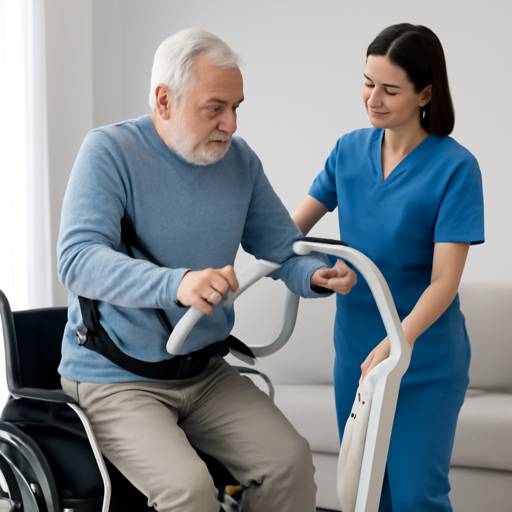
The core mechanism relies on a stable base platform, a set of knee pads, and a supportive harness or sling. As the patient sits on the edge of a bed or chair, the lift’s extendable leg or frame provides upward momentum, guiding them into a standing position. This motion is not a passive hoist; it is a guided, safe progression that protects both the patient’s joints and the caregiver’s back. According to the Bureau of Labor Statistics, healthcare workers experience some of the highest rates of musculoskeletal injuries, many of which are directly linked to patient handling tasks. A properly selected sit-to-stand lift mitigates this risk almost entirely. When you look at a sit to stand lift for sale, you should examine its safety features: hydraulic or battery-powered controls, non-slip footplates, and secure locking mechanisms are non-negotiable. Furthermore, these devices are not one-size-fits-all. Weight capacity, adjustability of the knee pads, and the clearance under the base for fitting around wheelchairs or toilet frames are all critical factors that differentiate a good lift from a great one.
Understanding the Mechanics and Benefits for Patient and Caregiver
The biomechanics of a sit-to-stand lift are what set it apart from other patient transfer solutions. The human body is not designed to be dragged or pulled from a seated position; such actions create shearing forces on the skin and can dislocate fragile shoulders. A sit-to-stand device, however, works in harmony with natural body movement. By placing the patient’s feet flat on the base plate and positioning the knee pads against their shins, the lift stabilizes the lower body. As the lift engages, it encourages the patient to lean forward, shifting their center of gravity over their feet—a movement that is essential for standing under one’s own power. This forward momentum is the key differentiator. It is not just about lifting; it is about retraining the body’s neuromuscular pathways. For patients suffering from Parkinson’s disease, post-stroke weakness, or lower extremity fractures, this repetitive, safe practice can lead to genuine improvements in balance and gait over time.
From a caregiver’s perspective, the reduction in physical strain is the most immediate and tangible benefit. A single manual transfer of a 150-pound patient can place over 300 pounds of compressive force on a nurse’s lower spine. Multiply that by dozens of transfers per day, and the result is an occupational hazard that leads to chronic pain and costly workers’ compensation claims. The purchase of a sit to stand lift for sale is a proactive investment in workplace safety and staff retention. Modern models, particularly those with battery-powered operation, allow a single caregiver to execute a transfer smoothly and without any jerking or sudden movements. The patient feels secure, and the caregiver maintains proper posture throughout the process. Additionally, these lifts are highly versatile. They can be used to transfer a patient from a bed to a wheelchair, from a wheelchair to a toilet, or even from a car seat to a transport chair. For home health aides who visit multiple patients per day, having a portable, lightweight model can be a game-changer. The ability to break down the lift for transport means that consistent, safe care can be delivered wherever it is needed, without relying on the patient’s home having a permanent installation. This portability ensures that the sit to stand lift for sale you choose can follow the patient through different care settings, from rehabilitation centers to their own living room.
There is also a significant psychological component to this type of transfer. Patients who are fully hoisted in a sling often report feelings of helplessness and loss of control. In contrast, a sit-to-stand transfer requires active participation. The patient must grasp the handles, push with their legs, and coordinate their breathing. This engagement reinforces the idea that they are not a passive object but an active participant in their own recovery. For facilities that prioritize patient dignity and autonomy, sit-to-stand lifts are a cornerstone of a therapeutic environment. They align with the principles of restorative care, which aims to maximize a person’s functional ability rather than simply completing tasks for them. When evaluating a sit to stand lift for sale, it is worth considering models that offer a range of handle heights and sling options, as this customization can make the difference between a patient who resists transfer and one who confidently participates.
Key Features, Specifications, and Choosing the Right Model
Navigating the market for a sit to stand lift for sale requires a clear understanding of the technical specifications that directly impact performance. The most critical factor is the weight capacity. While many standard models accommodate patients up to 350 or 400 pounds, bariatric options can handle significantly higher weights. It is essential to purchase a lift that exceeds the current weight of the intended user to provide a safety margin. Beyond capacity, the lifting mechanism is a primary differentiator. Manual hydraulic lifts are affordable, reliable, and do not rely on batteries, making them a good choice for facilities with consistent maintenance staff. However, they require the caregiver to pump a handle, which can be tiring over multiple transfers. Electric or battery-powered lifts, on the other hand, offer push-button operation that is faster and less physically demanding. The trade-off is that batteries require regular charging and eventual replacement. For a sit to stand lift for sale intended for heavy daily use, a powered model with a backup manual override is often the gold standard.
The base width and spread are equally important for stability and clearance. A wide, spreading base provides excellent stability during the lift, but it must also be able to fit under a standard bed or around a toilet. Some lifts feature a fixed base that is compact, while others have a base that widens as the lift is raised. For patients who spend most of their time in a wheelchair, the ability to roll the lift’s legs over the footrests of the chair is crucial. This “footplate accessibility” is often overlooked but is a common frustration for caregivers who cannot get the lift close enough to the patient. Another key specification is the sling and knee pad design. Knee pads should be padded and contoured to prevent pressure points on the shins. The sling itself can be a full back support sling or a smaller vest-style sling. Vest slings offer more freedom of movement for the arms but require the patient to have good trunk control. Full back slings provide more lateral support for patients with weaker torso muscles. When you are comparing a sit to stand lift for sale from different manufacturers, pay close attention to the range of slings available and whether they are machine washable, as hygiene is a primary concern in any care setting.
Safety systems are the final, non-negotiable pillar of a quality lift. Look for emergency stop buttons on the hand control and on the lift’s main body. A manual descent valve is critical in case of a power failure so that the patient can be lowered safely. Some advanced models include an emergency lowering function that is completely independent of the power supply. Additionally, consider the wheel quality and locking brakes. The lift will be rolled across floors, thresholds, and possibly carpet. Larger, swiveling casters with locking brakes provide better maneuverability and security during the transfer. Finally, the warranty and availability of replacement parts should influence your decision. A lift is a long-term investment. A robust warranty on the motor, frame, and battery indicates a manufacturer’s confidence in their product. When you click through to explore a sit to stand lift for sale, ensure the listing provides clear details on these specifications, and do not hesitate to inquire about demo models or trial periods. A lift that feels solid, glides smoothly, and adjusts easily to the patient’s height will be used more frequently and with better outcomes.
Real-World Applications: Case Studies in Acute Care and Home Health
To truly understand the impact of a sit-to-stand lift, it is useful to examine how these devices function in diverse, real-world scenarios. Consider the case of a large urban hospital’s orthopedics unit. This unit specialized in total knee and hip replacements. Historically, the nursing staff relied on manual lifting teams, which led to a high rate of lower back injuries among the staff and a fear of falling among post-operative patients. The hospital invested in a fleet of battery-powered sit-to-stand lifts. The results were immediate and measurable. Within six months, staff injury reports related to patient handling dropped by over 40%. More importantly, patients who used the lifts were able to begin ambulating an average of 1.2 days earlier than those who were manually assisted. The lifts allowed for frequent, safe standing attempts without the need for multiple therapists. This not only shortened hospital stays but also reduced the incidence of post-operative pneumonia and deep vein thrombosis—a direct result of getting patients upright sooner. For the hospital, the initial capital expense of purchasing a sit-to-stand lift for sale was quickly offset by savings in workers’ compensation and decreased length of stay.
In the home health environment, the challenges are different but equally demanding. A case study from a rural home health agency focused on a patient with advanced Multiple Sclerosis (MS). This patient, a 55-year-old former teacher, was still living at home with her elderly husband as her sole caregiver. He was struggling to transfer her from her power wheelchair to the bedside commode, and the risk of both of them falling was high. The agency recommended a portable sit-to-stand lift. The husband was initially intimidated by the equipment but learned to use it within a single training session. The lift allowed him to transfer his wife safely without straining his own aging body. The wife, who had been reduced to using a bedpan, regained the dignity of using a proper bathroom facility. The psychological shift was profound; she reported feeling less like a burden and more like a partner in her own care. The lift’s portability meant it could be moved between the bedroom and the living room, allowing her to spend more time in common areas of the house. This single piece of equipment transformed their home from a place of confinement into a place of functional living. This case highlights that when searching for a sit to stand lift for sale, one must consider not only the patient’s physical needs but also the caregiver’s ability to operate the device. Simple, intuitive controls and lightweight construction are paramount for non-professional caregivers who may have limited technical aptitude or physical strength.
Another compelling example comes from a long-term care facility that adopted a “zero-lift” policy. This facility was determined to eliminate all manual patient lifting to protect staff and preserve residents’ dignity. They implemented sit-to-stand lifts as the primary tool for residents who could bear weight. The facility tracked fall rates for residents using the lifts versus those who were still manually transferred or used full-body slings. The data showed that residents who consistently participated in sit-to-stand transfers had a 28% lower fall rate over a one-year period. The training coordinator attributed this to the active nature of the transfer, which helped maintain the residents’ proprioception—their awareness of their body’s position in space. In contrast, passive lifting in a full sling did not engage the vestibular system in the same way. For this facility, the sit-to-stand lift was not just a transfer tool; it was a therapeutic intervention that contributed directly to fall prevention. These real-world examples demonstrate that the value of a sit to stand lift for sale extends far beyond its technical specifications. It is a device that changes workflows, reduces injury, improves patient outcomes, and restores a fundamental sense of capability to those who need it most. Whether in a bustling hospital corridor or a quiet private home, the lift proves that technology, when applied thoughtfully, can be a powerful force for good in healthcare.

